Gregory J. Goalwin, Ph.D.
Greg Goalwin is Associate Professor of Sociology at Aurora University. He holds a Ph.D. in Sociology and M.A. in Ancient History from the University of California, Santa Barbara
Trained as a sociologist and historian of global politics, he specializes in the study of identity formation in and around borderland regions, places in between and on the boundaries of national communities.


Research:

My research interests are eclectic but tend to focus on the role of religion, politics, and culture in daily life.
My two current research projects diverge wildly:
One explores the social and political history of Hagia Sophia, a contested monument in Istanbul Turkey.
The second investigates the rapid growth and social consequences of pickleball, a racquet sport that has swept the nation since 2020.
Full descriptions of both projects and my earlier work on issues as varied as religious nationalism, the politics of science fiction, and religious schisms in ancient history can be found at the link below.

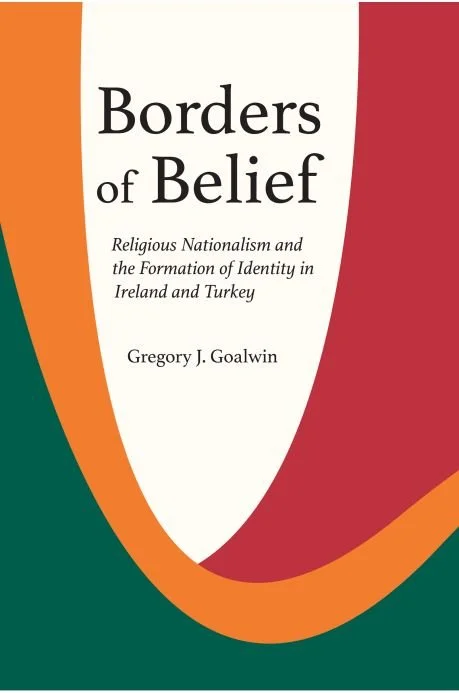
Borders of Belief
My first book, Borders of Belief: Religious Nationalism and the Formation of Identity in Ireland and Turkey was published by Rutgers University Press in 2022.
Religion and nationalism are two of the most powerful forces in the world. And as powerful as they are separately, humans throughout history have fused religious beliefs and nationalist politics to develop religious nationalism, which uses religious identity to define membership in the national community. But why and how have modern nationalists built religious identity as the foundational signifier of national identity in what sociologists have predicted would be a more secular world? This book takes two cases - nationalism in both Ireland and Turkey in the 20th century - as a foundation to advance a new theory of religious nationalism. By comparing cases, Goalwin emphasizes how modern political actors deploy religious identity as a boundary that differentiates national groups This theory argues that religious nationalism is not a knee-jerk reaction to secular modernization, but a powerful movement developed as a tool that forges new and independent national identities.
“Important theoretical lessons” from “a burgeoning expert on comparative and historical methodology - Contemporary Sociology: A Journal of Reviews
Available from Rutgers UP or Amazon Here!